Math8 min read
Kindergarten math worksheets for a simple year plan
A month-by-month kindergarten math plan covering counting, shapes, addition, subtraction, worksheet length and when to use hands-on practice.
 By the Nation1 teamPublished Oct 7, 2026
Contents
- What kindergarten math actually covers
- September to November: counting before calculation
- December to February: patterns, teen numbers and shapes
- February to May: addition, subtraction and mixed review
- How many problems should one worksheet have
- When a worksheet is the wrong tool
- Use the answer key without turning home into school
- Questions parents ask
Kindergarten math worksheets work best as short practice after a child has met the idea with objects, fingers or drawings. Start the year with counting and number writing, move through comparing, patterns, teen numbers and shapes, then introduce addition and subtraction before mixed review in May.
This plan is for a parent, kindergarten teacher or tutor working with a 5 or 6 year old. You do not need to copy a school timetable exactly, but a sensible order keeps pencil work matched to what the child can already see and explain.
What kindergarten math actually covers
United States Common Core kindergarten math falls into five broad areas. Children learn counting and number sense, simple addition and subtraction, teen numbers, measurement and sorting, and shapes. By the end of kindergarten, the standards expect children to count to 100 by ones and tens, and to start counting forward from a number other than one.
Number writing is smaller in range. Children are expected to write 0 to 20, count as many as 20 objects and say how many there are, then compare two numbers between 1 and 10. That is why I would not start September with pages of sums. A child who still has to work out what 7 means needs more counting, not harder arithmetic.
Addition and subtraction come after that base. Children use objects, fingers or drawings to add and subtract within 10, with fluency expected within 5. They also learn that numbers 11 to 19 are one group of ten ones plus some extra ones. Measurement work covers comparisons such as longer, shorter, heavier and lighter, while sorting asks children to put objects into categories.
Geometry is concrete too. Children name flat and solid shapes, including squares, circles, triangles, rectangles, hexagons, cubes, cones, cylinders and spheres. The kindergarten math hub is useful when you want preset sheets for several of these skills without building each page yourself. Keep the order simple: number meaning first, written practice after it.
September to November: counting before calculation
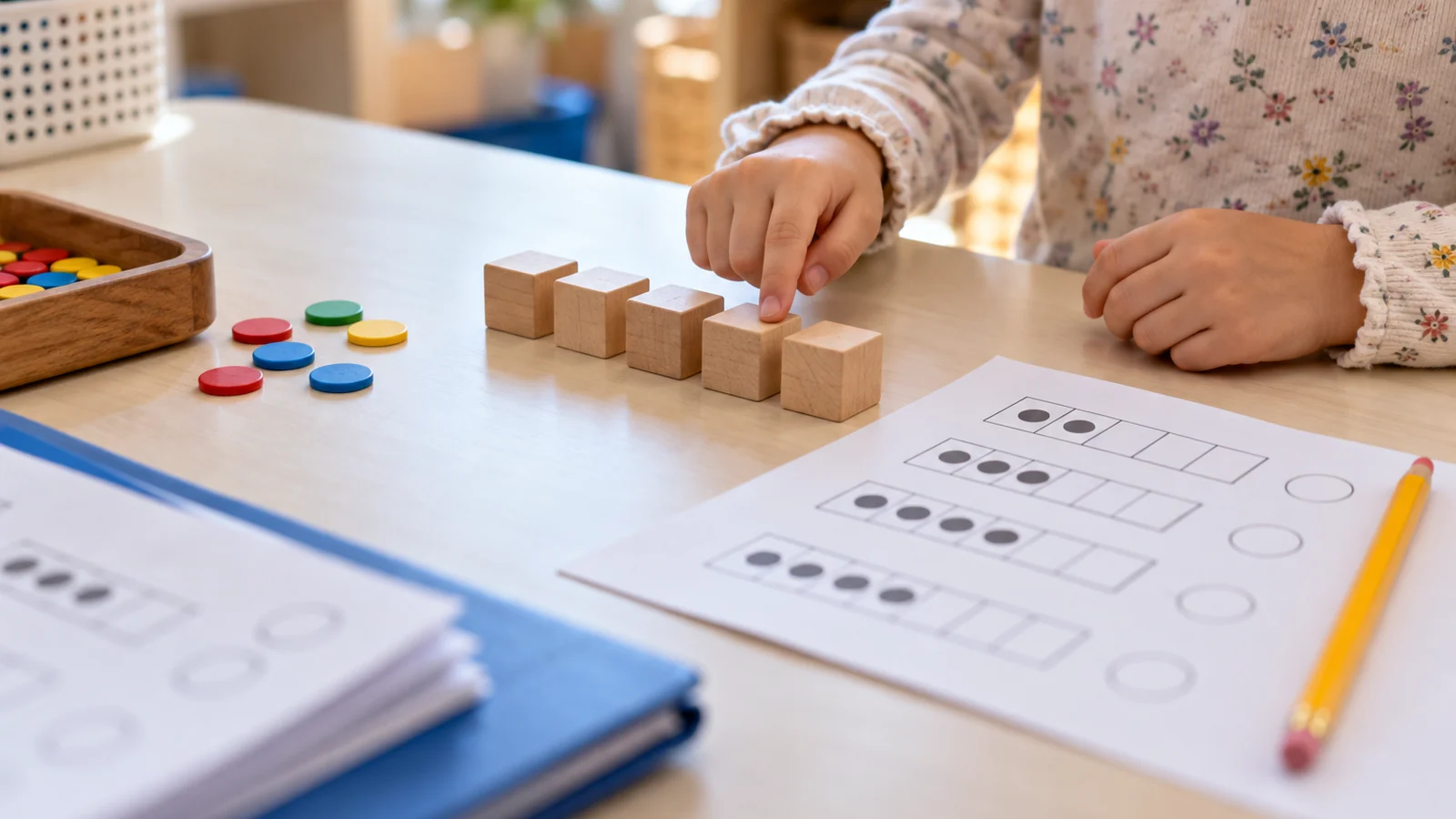
September is a good month for counting real things. Put out six buttons, ask your child to touch each one while counting, then change the group to eight. Once that feels easy, a counting worksheet can turn the same skill into pencil practice. Nation1 shows groups of shapes with a box where the child writes the total.
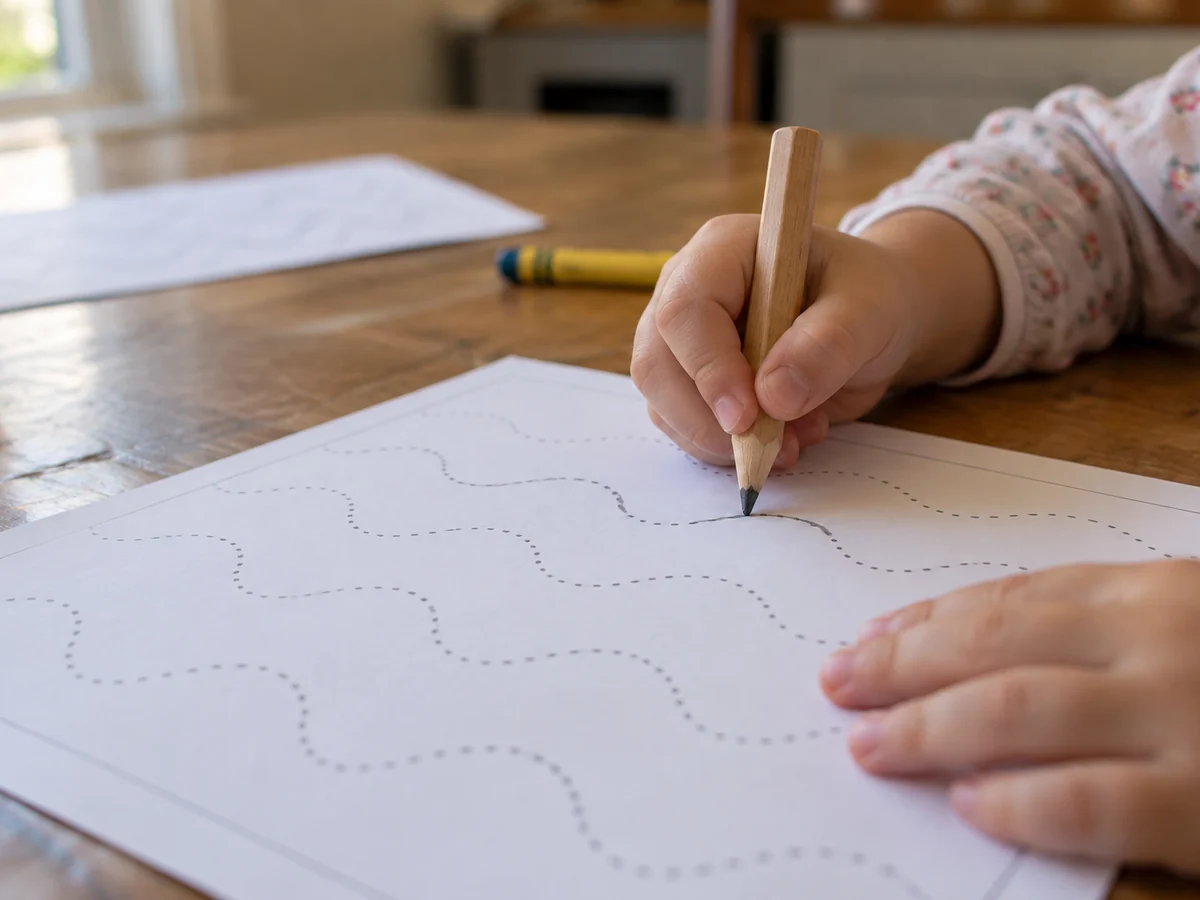
October can add number writing without dropping the counting work. The Common Core target is writing 0 to 20, so you have plenty of time. I would work in small sets rather than expect twenty numerals at once. The number tracing sheets cover 0 to 20 and give a child a clear model before independent writing.
By November, start comparing small numbers. Use two piles first: perhaps four blocks beside seven blocks. Ask which has more, then show the written numbers. The comparing numbers generator asks children to place greater than, less than or equal signs between two numbers, which works better once the child already understands the two quantities.
Got a child who can recite numbers but loses track while counting objects? Slow down. Touching or moving each object once matters more than racing toward 20.
December to February: patterns, teen numbers and shapes
December is a natural point for pattern work and review. A child might continue a sequence of circle, square, circle, square, or fill the missing number in a simple number pattern. Nation1's patterns worksheet mixes shape and number patterns with a blank to complete, so you can see whether the child notices what repeats.
January can shift some attention to 11 through 19. Do not treat 14 as a mysterious two-digit symbol. Build ten objects in one group, then add four more. The kindergarten standard describes these numbers as ten ones plus some extra ones, and physical groups make that idea visible.
Shape work fits well in January and February too. Name circles, squares, triangles and rectangles while drawing or finding them around the room, then add hexagons and solid shapes such as cubes, cones, cylinders and spheres. A child can trace flat shapes on a shape tracing sheet after handling or spotting the shapes first.
February is also a reasonable time to begin addition if counting is steady. Not every child will hit that point in the same week. If your child still struggles to make a group of eight objects without recounting several times, keep working on counting for a little longer.
February to May: addition, subtraction and mixed review
Addition should start with small totals. Put three blocks down, add two more and ask how many there are now. Fingers and drawings are fine too. Once the child understands that combining groups changes the total, use an addition worksheet and choose sums within 5 before moving to within 10. Nation1 also lets you choose how many problems appear.
So how do you know the child is ready? Ask a simple story question such as, "You have two apples and I give you one more. How many now?" If the child can model it with objects or fingers and explain what happened, pencil practice makes sense. If the symbols 2 + 1 = 3 seem disconnected from the story, stay with objects.
Subtraction belongs later in spring for most children because taking away makes more sense after combining groups is familiar. Start physically: five counters are on the table, two are removed, three remain. Then move to drawings and written equations. A subtraction worksheet lets you keep the number range small and set the problem count instead of handing over a crowded page.
May can be mixed review rather than a rush into first-grade work. Count, compare, add within familiar ranges, subtract within familiar ranges and revisit shapes or teen numbers that still cause hesitation. A fresh Nation1 sheet has different problems each time you generate one, so a child who remembers yesterday's answers still has to solve today's page.
How many problems should one worksheet have
For a 5 or 6 year old, I would usually keep one sheet to about 10 to 12 problems and roughly 10 minutes of focused seat work. Kindergarten attention for this kind of task is short. A page that can be finished while the child is still thinking clearly is more useful than twenty extra questions completed with guesses.
You do not need to fill every afternoon with worksheets either. One short page can be enough, especially if the same skill appeared earlier through blocks, toys, food pieces or a quick game. Honestly, I would rather stop after eight thoughtful answers than push through a page after the child has mentally left the table.
Watch the manner of the work, not just the clock. If the child starts reversing every answer, staring around the room or asking for help on a skill that was easy five minutes earlier, the session has probably run long. Stop there. Tomorrow's ten minutes will be better than today's forced twenty.
When a worksheet is the wrong tool
A worksheet is a poor first explanation of a new math idea. Manipulatives come first: buttons, blocks, fingers, toy cars, pieces of fruit, anything the child can move and count. Written questions are practice after the child understands what the numbers are doing.
Take subtraction. A printed "6 - 2" asks a child to interpret three symbols at once. Six counters on a table, with two physically taken away, show the action. Once the child can tell you that four are left, the written version has something real to attach to.
The same rule applies to comparison and teen numbers. Before asking for a greater than sign, let the child look at two groups and decide which has more. Before asking what 17 means, make a group of ten and another group of seven. Pencil work can then check whether that idea survived the move onto paper.
What if a child gets every worksheet answer wrong? Do not print an easier-looking page and hope. Go back to the objects, shrink the numbers and find the exact point where the idea stops making sense.
Use the answer key without turning home into school
Every Nation1 generator makes a Letter-size PDF in the browser, free and without sign-up, and the answer key is on the last page. That is handy if you are a parent who has not taught kindergarten math before. Check the page after your child finishes rather than hovering over each answer as it is written.
A wrong answer is useful when you ask one calm question: "Show me how you got this." You may find that the child counted one object twice, copied a numeral incorrectly or misunderstood the operation. Fix that step with two or three examples. There is no need to turn one missed problem into a lecture.
Finger counting is not something I would ban. The kindergarten standards allow fingers, objects and drawings for addition and subtraction within 10. If a child uses fingers to solve 4 + 1, that is a valid model of the quantity. With repeated practice, some small facts will become fluent within 5.
For printing, one sheet a day is plenty for many children. Use pencil rather than pen so corrections feel ordinary, and keep finished pages in a folder. After a few months, looking back at an early counting page beside a spring addition page gives the child something concrete to notice: the work really did change.
Questions parents ask
How many worksheets a week for a kindergartner?
Three to five short sheets can be plenty if the child is also using objects, games and everyday counting. Keep each page near 10 minutes and stop sooner if attention drops.
Should I start subtraction before addition is fluent?
I would introduce addition first, then bring in subtraction once combining groups makes sense. Kindergarten fluency is expected within 5, so subtraction practice does not need to wait for perfect speed on every addition fact within 10.
What if my child still counts on fingers?
Let them. Fingers are an accepted way to model kindergarten addition and subtraction, and they help a child keep track of quantity while the facts are still becoming familiar.